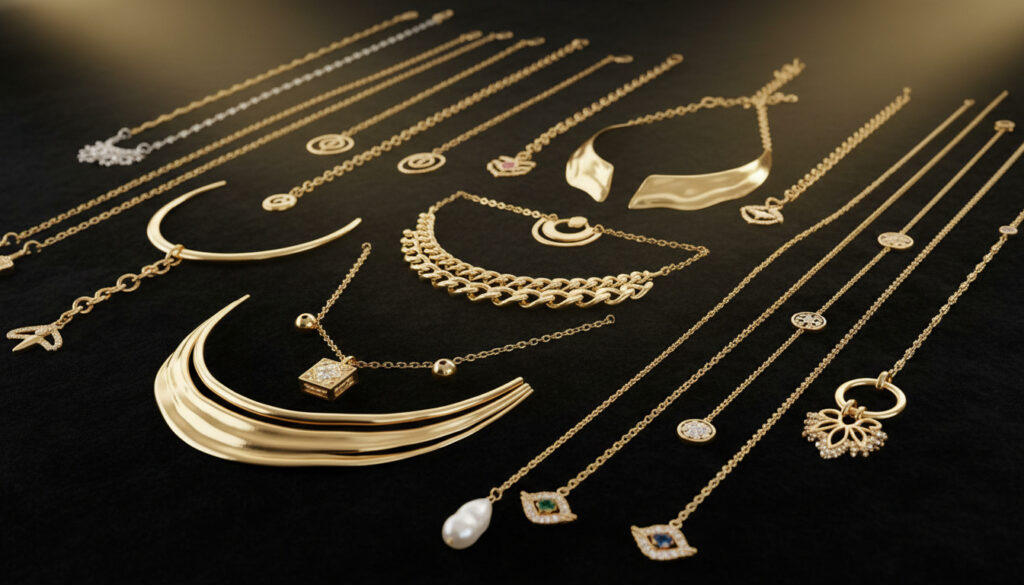
Gold Necklace for Women – Best Styles, Prices and Guide 2025
Gold necklaces for women have reclaimed center stage in 2025, blending timeless investment value with contemporary styling flexibility. The current market favors versatile pieces that transition seamlessly from casual daywear to formal evening events, emphasizing solid 14k and 18k constructions that resist tarnish while accommodating sensitive skin.
This year’s trends reveal a distinct shift toward intentional layering and mixed-metal compositions. Designers report increased demand for chains that combine yellow gold warmth with white gold refinement, creating dynamic visual texture without overwhelming the wearer. Understanding material quality, proper sizing, and authenticity markers remains essential for buyers navigating options ranging from sub-$100 minimalist pendants to four-figure statement pieces.
What Are the Best Gold Necklaces for Women?
Top Styles
Layered chains, Cuban links, dainty huggies, and solitaire pendants dominate 2025 collections.
Price Spectrum
Solid 14k pieces start under $100 for minimalist designs, extending beyond $4,200 for diamond accents.
Optimal Karats
14k offers durability for daily wear; 18k provides elevated purity for special occasions.
Authenticity Checks
Verify GIA compliance, FTC hallmarking, and non-magnetic properties before purchasing.
- Fourteen-karat solid gold delivers the optimal balance between structural integrity and cost efficiency for everyday necklaces.
- Layering multiple chain lengths—typically 16, 18, and 20 inches—creates dimensional styling that aligns with 2025’s “quiet luxury” aesthetic.
- Chunky Cuban links have transitioned from niche streetwear to mainstream acceptance, appearing in both yellow and white gold variations.
- Dainty huggie chains and micro-rope designs suit professional environments where subtlety matters.
- Hypoallergenic properties rely specifically on solid gold formulations; plated alternatives often contain nickel substrates that irritate sensitive skin.
- Mixed-metal combinations, particularly yellow gold pendants on white gold chains, represent the fastest-growing category this year.
- Adjustable clasps and extender chains solve length versatility problems without requiring multiple purchases.
| Karat | Gold Purity | Durability | Price Range | Best Application |
|---|---|---|---|---|
| 10k | 41.7% | High | $20–$100 | Budget-sensitive daily wear |
| 14k | 58.3% | Very High | $50–$500+ | Standard daily necklaces |
| 18k | 75.0% | Moderate | $150–$1,000+ | Fine jewelry occasions |
| 22k | 91.7% | Low | $300+ | Cultural/traditional pieces |
| 24k | 99.9% | Soft/Fragile | $500+ | Investment bars (rarely worn) |
How Much Does a Gold Necklace Cost?
Pricing for women’s gold necklaces spans three distinct tiers, driven by karat weight, craftsmanship complexity, and gemstone integration. Entry-level solid 14k pieces—including micro-rope chains and minimalist heart pendants—regularly appear under $100 through select artisan retailers, offering accessible entry points for quality metal. Mid-range investments between $100 and $500 typically encompass layered huggie sets, diamond-cut rope chains, and mixed-metal designs suitable for daily rotation.
Premium categories exceed $500, with chunky Cuban links and 18k statement pieces commanding $1,000 or more. A one-carat diamond solitaire pendant set in 14k gold currently averages $4,200 according to market data. Budget-conscious buyers comparing jewelry affordability against other essential expenses might reference economic benchmarks like What Is the Minimum Wage in Ontario – 2025 Rates and Rules to contextualize discretionary spending thresholds.
What Styles of Gold Necklaces Are Popular for Women?
Layered Chains and Mixed Metals
The defining aesthetic of 2025 centers on strategic layering. Fashion editors identify combinations of fine white gold chains with chunkier yellow gold counterparts as the signature “quiet luxury” look. This approach pairs delicate cable chains with textured rope variants, creating dimensional contrast that complements draped necklines and open-collar shirts.
Chunky Cuban Links
Oversized Cuban links have transcended their urban roots to become versatile wardrobe staples. Contemporary iterations feature diamond accents, two-tone constructions, and matte finishes that pair equally well with casual T-shirts and cocktail dresses. Christopher Fine Diamonds notes that these bold links now dominate both streetwear and high-fashion editorial spreads.
Dainty Huggies and Micro Chains
At the opposite end of the spectrum, whisper-thin huggie chains and micro-rope styles provide lightweight alternatives for professional settings. These 14k pieces—often measuring under 1mm in thickness—deliver subtle sparkle without visual weight, making them ideal for stacking above bolder base layers.
Mixing yellow and white gold within the same layered composition has shifted from fashion faux pas to encouraged technique. The key lies in maintaining consistent metal quality—pair 14k white with 14k yellow rather than combining solid gold with plated alternatives—to ensure uniform wear patterns and color longevity.
Which Gold Karat Is Best for Women’s Necklaces?
14k Versus 18k
Fourteen-karat gold contains 58.3% pure gold alloyed with copper and silver, creating a molecular structure that withstands daily abrasion without significant scratching. Eighteen-karat variants, at 75% purity, offer richer color saturation but softer surfaces prone to denting. For necklaces subjected to constant movement against clothing and skin, 14k remains the practical choice, while 18k suits ceremonial pieces worn less frequently.
Length and Fit Guidelines
Standard measurements follow a hierarchical system: 16-inch chokers sit at the base of the throat, 18-inch princess lengths rest at the collarbone, and 20-inch matinee drops reach the sternum. Petite frames often favor 16-inch chains to avoid overwhelming the décolletage, while layered configurations typically combine 16, 18, and 24-inch strands. Dana Rebecca Designs recommends adjustable clasps or extender chains for versatile wardrobe integration.
Hypoallergenic Considerations
Solid 14k and 18k gold inherently resist tarnishing and rarely trigger dermatological reactions, provided the alloys exclude nickel. Sensitivities typically arise from gold-filled or plated jewelry, where base metals such as brass or nickel contact the skin through microscopic wear points. Consumers with metal allergies should verify vendor specifications regarding alloy composition, particularly with white gold formulations that historically used nickel as a bleaching agent.
White gold necklaces manufactured before 2020 or sourced from non-certified vendors may contain nickel alloys. While modern 14k white gold often uses palladium-based alternatives, buyers with documented nickel allergies should request specific metallurgical certificates before purchasing.
Unlike plated alternatives, solid gold necklaces retain intrinsic metal value regardless of fashion cycles. Cult of Sun Jewelry identifies autumn 2025 as a peak period for acquiring bold gold pieces as long-term portfolio assets.
How Have Gold Necklace Styles Evolved?
- Ancient Civilizations: Egyptians hammered gold into fine wires, creating collar-style neckpieces that signified divine protection and social status.
- Victorian Era: Pendant necklaces gained prominence, featuring lockets and cameos that held miniature portraits, establishing the emotional narrative function of jewelry.
- Mid-20th Century: Mass production democratized gold chains, with 14k becoming the standard for American middle-class consumers seeking durable luxury.
- 2010s Minimalism: Single-strand chokers and barely-there chains dominated, reflecting Apple-era design aesthetics favoring clean lines and negative space.
- 2020-2024: Pandemic-era comfort dressing sparked interest in “forever pieces,” with consumers prioritizing solid gold over costume jewelry for home-office Zoom environments.
- Autumn 2025: Current trends emphasize maximalist layering and mixed-metal boldness, with The Jewellery Room reporting a 300% increase in Pinterest saves for “stacked gold chains.”
What Distinguishes Real Gold from Gold-Filled Alternatives?
| Established Facts | Uncertainties and Variables |
|---|---|
| Solid gold maintains consistent color throughout the metal; cut or scratched surfaces reveal identical hues. | Exact lifespan of gold plating varies wildly based on individual skin chemistry and exposure to perfumes or lotions. |
| Hallmarks such as “14k” or “18k” stamped on clasps indicate FTC-compliant metal content. | Magnet tests provide preliminary screening—real gold is non-magnetic—but cannot detect all non-gold metals used in sophisticated counterfeits. |
| Gold-filled jewelry contains approximately 5% gold by weight, legally requiring markings such as “1/20 14k GF.” | Individual allergic reactions to gold-filled base metals (brass, copper) depend on personal dermatological thresholds that laboratory tests cannot always predict. |
| Solid pieces remain liquid assets, sellable by weight at bullion rates regardless of design trends. | The resale value of designer name-brand necklaces versus generic solid gold chains fluctuates with secondary market preferences. |
Why Do Gold Necklaces Remain Investment Wardrobe Staples?
Gold necklaces occupy a unique position at the intersection of adornment and asset preservation. Unlike seasonal fashion accessories constructed from plastics or base metals, solid gold pieces depreciate minimally, often appreciating with spot metal markets. Goldzenn analysts note that 2025’s emphasis on “investment dressing” has redirected consumer budgets from fast-fashion jewelry toward single high-quality pieces that retain value across decades.
The versatility of modern designs amplifies this economic rationale. A 14k rope chain transitions from gym attire to evening wear without stylistic dissonance, amortizing its cost across hundreds of uses rather than single-event novelty. This adaptability aligns with broader sustainability movements, where consumers evaluate purchases by cost-per-wear metrics rather than initial expenditure.
What Do Jewelry Experts Recommend?
Fourteen-karat gold represents the optimal compromise between eternal durability and luxurious appearance. It withstands the friction of daily existence—sleeping, exercising, showering—without the rapid deterioration seen in plated alternatives.
— GIA Graduate Gemologist, Gemological Institute of America
Industry consensus emphasizes purchasing from retailers providing FTC-compliant disclosures and independent certification. Jewel Heart California emphasizes that authentication documentation proves particularly crucial for online purchases where tactile verification remains impossible.
Selecting Your Ideal Gold Necklace
The ideal gold necklace balances karat durability with stylistic intent, prioritizing solid 14k constructions for daily wear while reserving 18k pieces for occasional statements. Authenticity verification through hallmark inspection and magnetic testing prevents costly plated substitutions, while length selection should complement individual neck proportions and existing wardrobe necklines. Buyers seeking additional lifestyle content on balancing luxury purchases with household economics might explore Recette de Pain de Viande – Moist and Economical for complementary budgeting strategies. Ultimately, 2025’s trends favor personal expression over rigid rules, encouraging women to layer, mix, and wear gold as both armor and art.
Frequently Asked Questions
Is 14k gold better than 18k for necklaces?
Fourteen-karat gold offers superior scratch resistance and structural integrity for necklaces worn daily, while 18k provides richer color for occasional use.
What length gold necklace suits women?
Sixteen inches suits chokers and petite frames; 18 inches rests at the collarbone for universal appeal; 20+ inches accommodates layering.
Are gold necklaces good for sensitive skin?
Solid 14k and 18k gold rarely irritate skin. Avoid gold-filled or plated options, which may expose nickel or brass substrates through wear.
How can I tell if a gold necklace is real?
Verify hallmarks (10k, 14k, 18k), test with magnets (real gold is non-magnetic), and purchase only from GIA or FTC-compliant retailers.
How do I care for a gold necklace?
Store in soft pouches separate from other jewelry, avoid chlorine and household chemicals, and clean with mild soap and microfiber cloths.
What is the difference between gold filled and solid gold?
Solid gold contains pure gold throughout; gold-filled has a thin gold layer bonded to base metal that eventually wears away, potentially causing irritation.
Can I wear a gold necklace in the shower?
Solid 14k and 18k gold withstand water exposure, though soaps may create residue. Remove plated necklaces before showering to prevent accelerated tarnishing.
More related posts
 How to Make a Paper Airplane: Easy Steps That Fly Far
 Kid Rock Net Worth 2024: $150M to $175M Breakdown
 NBA In-Season Tournament – Format, Schedule and Rules Guide
 Jean Coutu Trois-Rivieres – Locations Hours Contacts
 1 lb to Grams: Converter & Exact 453.59237 g Calculation
 Man Utd Transfer News: Latest Live Rumours & Updates
 The Amazing Race Canada Episodes – Full Seasons and Streaming Guide
 CAD to Philippine Peso – Live Rate, Charts & Converter