Barry and Honey Sherman – Unsolved Murders Timeline and Theories
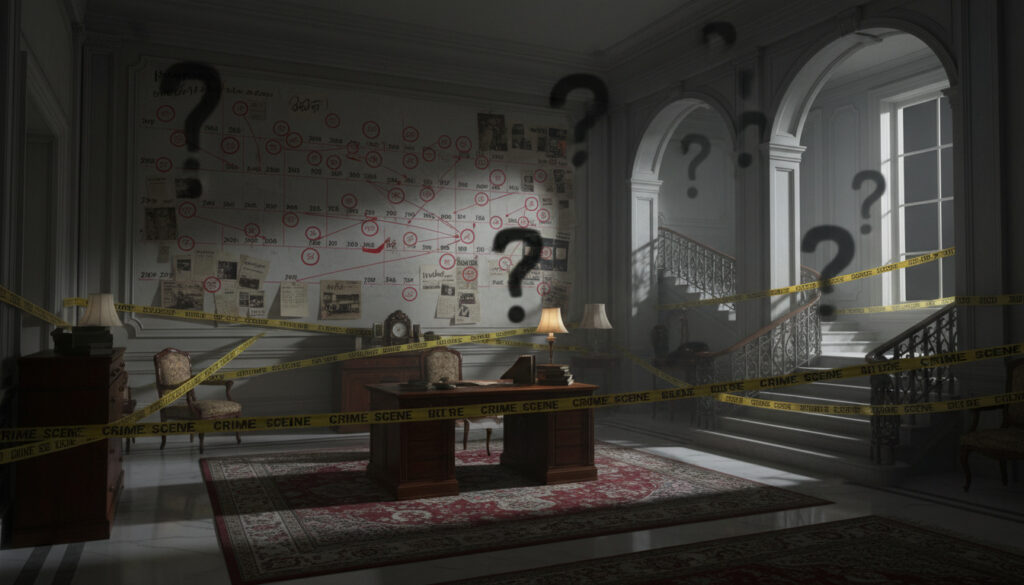
Real estate agents arriving for a scheduled showing at 50 Old Colony Road on the morning of December 15, 2017, discovered a scene of calculated horror. Barry Sherman, 75, founder of generic pharmaceutical giant Apotex, and his wife Honey, 70, lay dead near their basement indoor pool, their bodies positioned with belts looped around their necks and tied to a metal railing. The staging initially suggested murder-suicide, though evidence quickly established a darker reality: a targeted double homicide executed with precision, leaving no signs of forced entry and no immediate suspects.
Seven years later, the killings remain Toronto’s most infamous unsolved case. Despite a $10 million reward offered by the Sherman family, multiple private investigations, and thousands of hours of police work, no arrests have been made. The murders have become synonymous with the dangers accumulated through decades of high-stakes business litigation, family estrangement, and accumulated wealth.
What Happened to Barry and Honey Sherman?
Barry Sherman (75), Honey Sherman (70)
December 15, 2017
Ligature strangulation
Unsolved double homicide
The couple was last seen alive on December 13, 2017, meeting with contractors to review designs for a new home build. They had recently listed their North York mansion for $6.9 million. When real estate agents entered the property two days later for a prospective buyer’s tour, they found the Shermans fully clothed and semi-seated beside the pool, their coats pulled over their shoulders to restrain their arms. According to case details documented by investigators, Honey Sherman displayed facial bruising consistent with a struggle, while Barry’s winter gloves and house inspection papers lay scattered near the garage doorway leading to the basement.
Initial autopsies confirmed death by ligature neck compression. The positioning—back-to-back, belts tied to a railing—mirrored 1970s art installations of human figures that Barry Sherman reportedly collected, suggesting intimate knowledge of the residence. Detectives found no suicide note and no evidence of forced entry at any access point.
Key Facts of the Crime Scene
- Staged Scene: Bodies arranged to mimic murder-suicide, with belts tied to pool railing
- Restraint Method: Victims’ own coats pulled backward over shoulders to immobilize arms
- Physical Evidence: Honey’s cellphone discovered in an unusual location—the bathroom—suggesting possible struggle or movement
- Entry Point: No forced entry; killer likely had access or familiarity with property
- Timing: Murders believed to have occurred late December 13 or early December 14
- Discovery Context: Found by agents during routine real estate showing
| Case Detail | Verified Information |
|---|---|
| Victims | Barry Sherman (75), Honey Sherman (70) |
| Discovery Location | 50 Old Colony Road, North York, Toronto |
| Discovery Date | December 15, 2017, approximately 11:45 AM |
| Cause of Death | Ligature strangulation |
| Scene Positioning | Semi-seated, backs to pool, belts tied to railing |
| Arm Restraint | Coats pulled over shoulders, pulled tight |
| Forced Entry | None detected |
| Suicide Note | None found |
| Last Confirmed Sighting | December 13, 2017, evening |
| Police Classification | Targeted double homicide (confirmed January 26, 2018) |
| Net Worth at Death | Estimated $4.8 billion |
| Primary Residence | Toronto mansion (listed for sale, $6.9M) |
Who Killed Barry and Honey Sherman? Key Suspects and Theories
Investigative reports and police statements have identified several persons of interest and speculative motives, though no suspect has been publicly charged or formally accused. The investigation has examined familial disputes, business rivals, and opportunistic criminals, yet concrete evidence linking any individual to the murders remains elusive.
The Kerry Winter Connection
Kerry Winter, a distant cousin of Barry Sherman, emerged early as a figure of interest. Winter had engaged in prolonged litigation against Sherman, alleging unfair treatment regarding the estate of Sherman’s late uncle, Louis Winter, from whom Barry had acquired the initial pharmaceutical business that became Apotex. In 2017, courts dismissed the Winters family lawsuit, and Barry Sherman subsequently won a $300,000 judgment for legal fees in 2020. In statements reported by Bloomberg and police sources, Winter acknowledged police had labeled him a “prime suspect,” citing his construction supervisor job provided flexible hours and potential opportunity. No charges have ever been filed against him.
Unnamed Persons of Interest
In November 2020, Toronto Police announced they had identified a “person of interest,” potentially comprising one or multiple individuals. This development followed the execution of over 37 search warrants beginning in September 2019. On December 14, 2021, investigators released a 20-second security video showing a suspect in dark clothing walking near the Sherman property on a snowy night, timed precisely to the murders. Despite thousands of tips generated, the individual remains unidentified.
Toronto Police have not publicly named any charged suspects or issued arrest warrants in connection with the Sherman murders. The case remains officially unsolved, classified as an open homicide investigation.
Business Rival and Financial Motives
Speculation has long centered on Barry Sherman’s aggressive business practices. As founder of Apotex, Canada’s largest generic drug manufacturer, Sherman had accumulated enemies through decades of patent litigation and corporate maneuvering. Corporate records document dozens of lawsuits involving Apotex and competitors. Additionally, Honey Sherman had reportedly expressed concerns about charitable funding allocations and had made comments regarding visitors to their home of “a certain ethnicity,” though no evidence substantiates these as direct motives for the killings.
Current Status of the Sherman Murder Investigation
The Toronto Police Homicide Unit retains active carriage of the investigation, though updates have grown sparse since 2021. Official statements from the Toronto Police Service indicate the case remains “very active,” with detectives continuing to review evidence and pursue leads. No arrests occurred through 2024, and no significant developments have been publicly disclosed since the 2021 video release.
Family’s Independent Investigation
Within days of the murders, the Sherman children, led by son Jonathon Sherman, hired private investigators to conduct a parallel probe, pledging to “leave no stone unturned.” The family offered a $10 million reward for information leading to arrest and prosecution. However, by late 2019, the private investigation closed without generating breakthroughs sufficient to identify the killer.
Despite extensive forensic analysis, digital reconstruction, and public appeals, the Barry and Honey Sherman murders remain unsolved. Toronto Police have not indicated imminent resolution.
Barry and Honey Sherman Background: Apotex Empire and Rivalries
Understanding the victims requires examining the pharmaceutical empire Barry Sherman built and the legal entanglements that shadowed his final years. Born in 1942, Sherman founded Apotex in 1974, transforming it into Canada’s largest generic drug manufacturer and amassing a fortune exceeding $4.8 billion. His business model relied on challenging brand-name drug patents, generating both massive wealth and relentless litigation.
The Winters Family Legacy Dispute
The most persistent familial conflict involved the estate of Louis Winter, Barry’s uncle, who founded Empire Laboratories in the 1950s. After Winter’s death, Barry Sherman purchased Empire, using its foundation to establish Apotex. Distant cousins, including Kerry Winter, alleged Sherman had improperly benefited from the estate, depriving them of inheritance. Court records document over a decade of litigation, culminating in dismissed claims and the 2020 fee award to Sherman’s estate.
Honey Sherman’s Philanthropy
Honey Sherman maintained an active philanthropic profile, serving on boards including charitable organizations supported by the family foundation. Friends described her as the emotional center of the family, deeply involved in their children’s lives and community causes. Her murder alongside her husband suggested either a personal vendetta against the couple specifically, or a calculated attack intended to devastate the entire Sherman family unit.
The Sherman family has maintained a $10 million reward for information leading to the arrest and prosecution of those responsible for the murders, one of the largest private rewards in Canadian history.
Timeline of the Barry and Honey Sherman Murders
The investigation’s trajectory reveals shifting theories and sporadic developments, from initial murder-suicide speculation to the complex homicide investigation underway today.
- — Barry and Honey list their Old Colony Road home for $6.9 million while planning new construction
- — Couple last seen alive meeting home builders to review designs; murders likely occurred hours after their return
- — Real estate agents discover bodies during scheduled showing; victims fully clothed, positioned near pool
- — Initial police comments suggest no suspects sought; autopsies confirm ligature homicides
- — Memorial service draws thousands, including Prime Minister Justin Trudeau, Toronto Mayor John Tory, and Ontario Premier Kathleen Wynne
- — Sherman family retains private investigators to conduct parallel investigation
- — Toronto Police officially rule deaths a targeted double homicide
- — Police confirm thousands of evidence items reviewed; no suspects publicly identified
- — Investigators execute 37+ search warrants; family announces $10 million reward
- — Family’s private investigation concludes without identifying perpetrator
- — Police identify unnamed “person of interest”
- — Security video released showing suspect walking near property on snowy night timed to murders
What Is Certain vs. Uncertainty in the Sherman Case?
Established Facts
- Homicide classification (confirmed January 2018)
- Cause: Ligature neck compression
- Date of death: December 13-14, 2017
- Scene staging to resemble murder-suicide
- No forced entry
- 2021 video evidence of unidentified suspect
Unresolved Questions
- Identity of perpetrator(s)
- Number of individuals involved
- Specific motive (business vs. personal)
- How killer gained entry
- Whether murders were contract killings
- 2024-2025 investigation developments
Why Do Police Think the Shermans Were Murdered?
Investigators have maintained since 2018 that the murders were targeted rather than random, citing the specific staging, the restraint techniques employed, and the lack of forced entry. The method—ligature strangulation requiring physical proximity and time—suggests personal vendetta or professional execution rather than opportunistic violence.
The leading theories center on Barry Sherman’s business dealings and the Winters family litigation. Within Canada’s tightly connected pharmaceutical industry, Sherman’s aggressive generic drug strategies generated significant animosity among competitors. However, police have not confirmed which theory aligns with evidence, and the possibility of multiple motives remains.
Sources and Key Statements From the Investigation
The deaths of Barry and Honey Sherman have been classified as a targeted double homicide. We are committed to finding those responsible.
— Toronto Police Service, January 2018
We will leave no stone unturned in our efforts to find the truth.
— Sherman Family Statement, via Private Investigators, 2017
Will the Barry and Honey Sherman Murder Case Be Solved?
The Barry and Honey Sherman murders remain Toronto’s most scrutinized cold case, representing both the limitations of modern forensic investigation and the challenges of prosecuting crimes among the ultra-wealthy, where motives intertwine business, family, and legacy. The full timeline of developments continues to expand as the investigation persists, yet without the crucial identification of the 2021 video suspect or new forensic breakthroughs, resolution appears distant. The $10 million reward stands as testament to the family’s ongoing pursuit of justice, even as the case enters its eighth year without resolution.
Frequently Asked Questions
Was the Sherman death a murder-suicide?
No. While initial speculation suggested murder-suicide due to the staged scene, autopsies confirmed both deaths were homicides by ligature strangulation, and police ruled it a targeted double homicide in January 2018.
How was Apotex involved in the Sherman deaths?
Apotex itself was not directly implicated, though Barry Sherman’s role as founder generated business enemies and litigation that police have examined as potential motive sources.
What role did family play in the Sherman murders?
No family member has been charged. Distant cousin Kerry Winter was identified by police as a “prime suspect” due to litigation motives, but no evidence has led to charges.
Are there any arrests in the Barry Sherman case?
No arrests have been made. Police identified a “person of interest” in 2020 and released video of an unidentified suspect in 2021, but no charges have been filed.
Why were Barry and Honey Sherman killed?
The specific motive remains unknown. Theories include business disputes, family litigation, and targeted assassination, though police have confirmed no definitive motive publicly.
Who were Barry and Honey Sherman?
Barry Sherman founded Apotex, Canada’s largest generic drug company, amassing a $4.8 billion fortune. Honey Sherman was a philanthropist and community leader. They were among Canada’s wealthiest couples.
When were Barry and Honey Sherman found dead?
They were discovered on December 15, 2017, though they were last seen alive December 13 and likely killed that night or early December 14.
What is the latest update on the Sherman murder case?
As of 2024, no new public updates have been released. The last major development was the December 2021 security video. Toronto Police state the investigation remains active.
More related posts
 John Edward Thomas Moynahan: Tom Brady’s Son Jack Bio
 1000 CAD to INR: Live Rate, Converter & Forecast
 1 CAD in INR – Current Rate and Market Insights
 Jordan 4 Red Thunder – Release Date Price Resale Guide
 Base de Lit Double – Guide to Types, Prices and Models 2025
 TD Easy Web Login Guide: Access and Troubleshoot EasyWeb Securely
 What Is Halal Meat? Definition, Process & Differences Explained