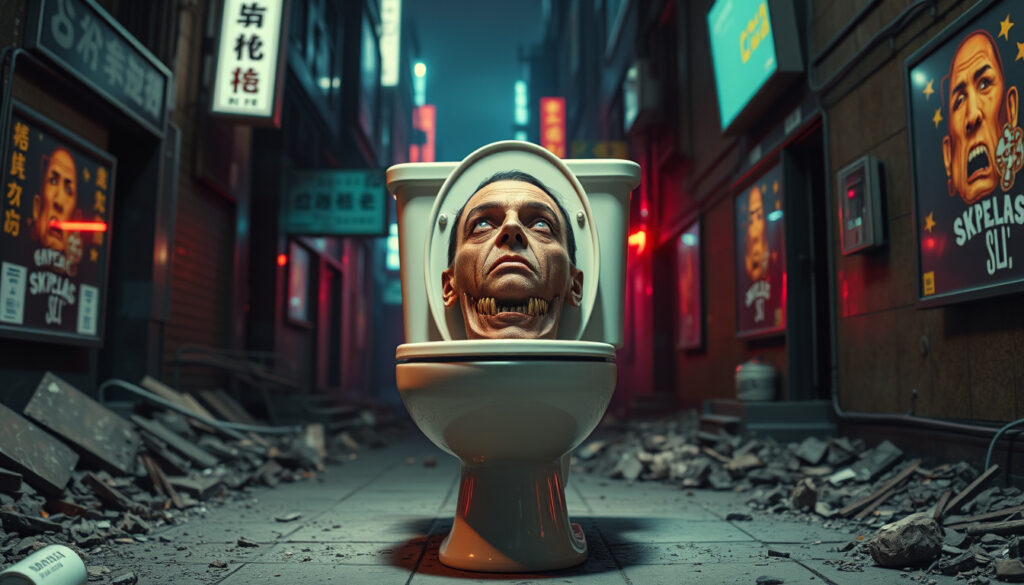
What Is Skibidi Toilet – Viral Series Lore and Facts
Skibidi Toilet is a viral machinima web series that has captured the attention of millions, particularly among younger audiences. Created by Alexey Gerasimov under the YouTube channel DaFuq!?Boom!, the series features an absurd premise: singing toilets with human heads wage war against humanoid cameramen, speakermen, and TV men. Since its debut in February 2023, the series has grown into a global phenomenon, spawning billions of views and becoming deeply embedded in Gen Alpha internet culture.
The show originated as short-form content on YouTube, leveraging the Source Filmmaker tool to create quick, surreal animations. What began as a simple episode depicting a bathroom confrontation has evolved into an elaborate narrative spanning over 70 episodes, complete with its own mythology, faction conflicts, and an instantly recognizable theme song. The infectious “skibidi bop bop yes yes yes” hook has become a cultural touchstone, driving the series’ viral spread across TikTok and YouTube Shorts.
Despite its minimalist animation style, Skibidi Toilet has accumulated a dedicated fanbase and generated significant discussion around content appropriateness, merchandise, and the nature of internet humor. The series represents a unique intersection of machinima artistry, meme culture, and serialized storytelling that continues to evolve with each new episode.
What is Skibidi Toilet?
At its core, Skibidi Toilet is a machinima web series created using Source Filmmaker, a tool commonly associated with Half-Life and Counter-Strike animations. The series presents a bizarre narrative in which humanoid beings with everyday object heads engage in ongoing conflict.
The series began with Episode 1, released in February 2023, showing a Cameraman drone investigating a bathroom where a toilet head emerges and sings before attacking. This unconventional opening established the tone for everything that followed.
- The series has surpassed 70 episodes as of 2024, with the narrative expanding from apartment settings to global warfare
- Monthly views on the Skibidi Toilet Anthem alone reach into the billions across platforms
- The show has spawned merchandise including figures of Cameramen, Toilets, and Titans
- Fan theories connect the series to YouTube Poop culture, with toilets symbolizing “poop” video traditions
- The franchise operates as a hierarchical society featuring religion, politics, and research and development divisions
- Both protagonist and antagonist factions have developed advanced capabilities including jetpacks and teleportation
- The series has become deeply integrated into Gen Alpha slang and internet meme culture
| Fact | Details |
|---|---|
| First Episode | February 2023, DaFuq!?Boom! YouTube channel |
| Main Antagonists | Skibidi Toilets, led by G-Toilet |
| Protagonists | Cameramen, Speakermen, TV Men (Alliance) |
| Platform | YouTube (primary distribution) |
| Creator | Alexey Gerasimov (DaFuq!?Boom!) |
| Total Episodes | Over 70 by 2024 |
What is the Skibidi Toilet Lore?
The Skibidi Toilet narrative centers on a full-scale invasion of Earth by Skibidi Toilets, creatures that appear as functioning toilets with human heads emerging from their bowls. The series mythology suggests these entities may have originated in Ohio and operate as a hierarchical society with their own religion, politics, and research divisions.
Factions and the Alliance
The conflict opposes two main forces. The Skibidi Toilets, led by G-Toilet (a character based on the G-Man from Half-Life 2), serve as the primary antagonists. Their ranks include various specialized units with stretching necks, handles, weapons, and advanced technology. The opposing Alliance consists of Cameramen (with CCTV camera heads), Speakermen (with speaker heads), and TV Men (with television heads), with elite Titan units serving as their most powerful warriors.
Central to the threat posed by Skibidi Toilets is the Skibidi Virus or Corruption mechanism, which spreads through their signature song. Humans exposed to this audio corruption transform into additional Skibidi Toilets, creating an expanding army that initially overwhelms human defenses.
The Alliance forces employ Titans—large-scale humanoid units with specialized functions. Titan Speakerman and Titan TV Man represent some of the most powerful Alliance units, though their effectiveness varies as the conflict evolves.
Major Plot Developments
The narrative has progressed through several distinct phases. Early episodes establish the war as Skibidi Toilets overrun human civilization, forcing the Alliance to mount a defensive response using Titan units. The conflict escalates when a Scientist Skibidi Toilet successfully mind-controls Titan Speakerman, prompting the Alliance to eliminate the threat at Alpha-Hills laboratories. This event reveals the involvement of an entity known as the Administrator, adding another layer to the mythology.
A significant narrative shift occurs when Astro Toilets—G-Toilet’s former allies—invade, forcing an unlikely truce between Skibidi Toilets and the Alliance. However, the temporary alliance fractures following base losses and the compromise of Titan TV Man. Both factions subsequently engage in technology theft, acquiring abilities like jetpacks and teleportation from one another, escalating the arms race.
Recent episodes, including Episode 70 (Part 2), have begun exploring the origins of the conflict by hinting at events dating back to the 1970s and 1980s, suggesting a deeper historical context than initially apparent. Comprehensive lore recaps created by fans span between 30 and 52 minutes, covering everything from early human involvement through the current Astro conflicts.
What is the Skibidi Toilet Song?
The Skibidi Toilet Anthem serves as both the musical signature of the series and a central plot device. The song is a mashup incorporating elements of Timbaland’s “Give It to Me” (2007) combined with additional tracks, creating a distinctive hook built around the memorable phrase “skibidi bop bop yes yes yes.”
The Anthem’s Cultural Role
Within the series narrative, the anthem functions as more than entertainment—it represents the mechanism of corruption through which Skibidi Toilets convert humans into additional toilet-headed creatures. Exposure to the song triggers transformation, making it a weapon of biological warfare in the series’ mythology.
The anthem’s infectious quality has driven the series’ viral spread beyond traditional YouTube audiences. The “skibidi bop bop yes yes yes” hook proves immediately memorable, translating effectively to short-form content formats and making the song a standalone phenomenon on platforms like TikTok.
The anthem combines catchiness with brevity, making it ideal for looping on short-form video platforms. Its repetitive structure and absurd lyrics create a contrast with the violent content of the episodes themselves, a tension that appeals to younger audiences familiar with ironic and surreal humor.
What is Skibidi Toilet on TikTok?
TikTok has served as a critical platform for Skibidi Toilet’s explosive growth, transforming the series from a YouTube niche into a global cultural phenomenon. The platform’s algorithm rewards content that captures attention quickly, and Skibidi Toilet’s absurd premise and memorable anthem proved perfectly suited for this environment.
Viral Mechanics
The series found its primary audience through TikTok Shorts featuring clips of the anthem and battle sequences. Short compilations showing toilet heads singing the signature song accumulated hundreds of millions of views, while battle clips featuring the war between toilets and Alliance members generated their own viral momentum. The visual absurdity of the concept—functional toilets with human heads engaged in combat—proved inherently shareable.
The “skibidi” term itself has become integrated into Gen Alpha slang, frequently appearing in memes that connect the series to broader internet humor. The word has been used to mock the concept of “rizz” (charisma) in various meme formats, demonstrating how the series has transcended its source material to become a reference point for online communication itself.
Cross-Platform Spread
While TikTok drove initial mainstream awareness, the phenomenon expanded across multiple platforms. YouTube Shorts featured clipped content from the full episodes, while dedicated fan communities on Reddit and Fandom wikis developed to document lore, analyze plot developments, and create fan content. The cross-platform presence has helped sustain interest between major episode releases.
What is Skibidi Toilet Toy and Age Rating?
The Skibidi Toilet franchise has expanded beyond digital content into merchandise, with official products including collectible figures representing key characters. Figures of Cameramen, Skibidi Toilets, and Titan units have entered the market, reflecting the franchise’s growing commercial scope.
Available Merchandise
The merchandise lineup includes articulated figures capturing the distinctive designs of major characters. These products appeal primarily to the younger audience that has embraced the series, though the violent content raises questions about appropriateness for the core demographic.
The series contains animated violence including combat between factions, character deaths, and body horror elements (characters being transformed into toilets). Parents and caregivers may wish to review episodes before allowing younger children to engage with the content, as the viral appeal targets kids despite the violent sequences.
Platform Age Ratings
No unified age rating exists across platforms, and official guidance varies. YouTube typically assigns a “Made for Kids” designation based on creator input, though the content’s violent nature may warrant closer scrutiny. Parental monitoring tools remain recommended for younger viewers given the discrepancy between the target audience and the series’ mature themes.
For those interested in toy availability, checking local retailers provides current stock information. Toys R Us Kingston may carry Skibidi Toilet merchandise at various times, though inventory varies by location and season.
Skibidi Toilet Timeline
Understanding the series’ evolution helps contextualize its current cultural position. The following timeline captures key milestones in the Skibidi Toilet phenomenon.
- February 2023: Episode 1 debuts on the DaFuq!?Boom! YouTube channel, introducing the Skibidi Toilet concept
- 2023: Series gains traction on YouTube, accumulating views among machinima and internet humor enthusiasts
- Early 2024: TikTok virality accelerates, with the anthem and short clips reaching billions of combined views
- 2024: Astro Toilet arc introduces new antagonists, shifting the narrative toward a multi-faction conflict
- 2024: Episode count surpasses 70, with storytelling expanding from localized conflicts to global warfare
- 2024: Official merchandise launch includes figures of major characters across faction lines
- 2024-Present: Series continues with ongoing episodes, arms race escalation, and expanding mythology
What We Know and What Remains Unclear
Transparent reporting requires distinguishing between established facts and information that remains speculative or unconfirmed. The following comparison clarifies what sources have verified versus what remains open to interpretation.
| Established Information | Information That Remains Unclear |
|---|---|
| Creator is Alexey Gerasimov (DaFuq!?Boom!) | Whether G-Toilet was always intended as the main antagonist |
| Series premiered in February 2023 | Specific episode release schedule and production timeline |
| Over 70 episodes exist by 2024 | Exact number of total episodes released through early 2025 |
| Three main Alliance factions confirmed | Whether additional factions exist in the broader mythology |
| The Skibidi song serves as the corruption mechanism | Complete mechanics of the transformation process |
| Official merchandise has launched | Full scope and availability of upcoming merchandise |
| Ohio origin mentioned in the mythology | Significance of the Ohio reference and whether it ties to real-world events |
The Cultural Context of Skibidi Toilet
Skibidi Toilet represents a distinctive entry in internet humor traditions, drawing from machinima roots while adapting to the demands of contemporary short-form content ecosystems. The series builds on traditions established by YouTube Poop creators, who pioneered surreal, non-sequitur content that prioritized emotional impact over logical coherence.
The series’ cultural resonance with Gen Alpha reflects several broader trends in youth entertainment. Absurdist humor has become increasingly prominent among younger internet users, who appreciate content that deliberately subverts expectations. The stark visual contrast between mundane objects (toilets, cameras, televisions) and violent action creates an unsettling quality that younger audiences find entertaining rather than disturbing.
The integration of “skibidi” into Gen Alpha slang vocabulary demonstrates how internet series can transcend their source material to become reference points for broader communication. When teenagers use “skibidi” in memes or conversation, they invoke not just the series but an entire mode of ironic, self-aware humor associated with contemporary internet culture.
Fan analyses, including work by creators like Film Theory, have connected the series to deeper media studies frameworks while acknowledging its roots in meme culture. These analyses suggest that Skibidi Toilet functions as both entertainment and cultural commentary, even if that commentary is delivered through deliberately absurd means.
Sources and Perspectives
“Skibidi Toilet is a viral machinima web series created by Alexey Gerasimov using Source Filmmaker, featuring a war between human-headed singing toilets and humanoid Cameramen, Speakermen, and TV Men.”
— Wikipedia, Skibidi Toilet article
“The core narrative follows Skibidi Toilets, led by G-Toilet, invading Earth and converting humans via a Skibidi Virus spread through their song.”
— Skibidi Toilet Wiki
Summary
Skibidi Toilet has emerged as one of the most distinctive viral phenomena of recent internet culture. What began as a simple Source Filmmaker experiment has evolved into a sprawling narrative spanning over 70 episodes, featuring elaborate faction conflicts, an instantly recognizable anthem, and merchandise across multiple product categories. The series’ absurd premise—singing toilet heads waging war against camera-headed humanoids—captures something essential about contemporary youth humor, blending absurdist non-sequitur with surprisingly coherent worldbuilding.
For those exploring the phenomenon, understanding Skibidi Toilet requires recognizing both its entertainment value and its cultural significance. The series demonstrates how digital creator economies can produce content that resonates deeply with young audiences, generating billions of views and becoming embedded in generational slang. Parents and educators may find value in understanding the series’ appeal, even if the content itself requires scrutiny regarding age-appropriateness. The phenomenon shows no signs of slowing, with ongoing episodes, merchandise expansions, and continued presence across short-form video platforms.
For additional context on viral internet phenomena and generational cultural shifts, reviewing resources like the The Wiggles The Twelve Days of Christmas Lyrics guide may provide useful contrast for understanding how children’s entertainment evolves across different eras and formats.
Frequently Asked Questions
What does “skibidi” mean in Gen Alpha slang?
In Gen Alpha internet culture, “skibidi” has become an ironic term often used to mock the concept of “rizz” (charisma). The word originated with the Skibidi Toilet series but has evolved into broader meme usage disconnected from the actual content.
Is Skibidi Toilet appropriate for children?
The series contains animated violence including combat and character transformation scenes. While it has viral appeal among children, parents should review content before allowing younger viewers to watch, as no unified age rating exists across platforms.
Where can I watch Skibidi Toilet episodes?
Full episodes are available on the DaFuq!?Boom! YouTube channel, with shorts and clips also appearing on TikTok and YouTube Shorts. The creator releases episodes on an ongoing basis.
What is the Skibidi Toilet Anthem?
The anthem is a mashup song featuring the refrain “skibidi bop bop yes yes yes,” incorporating elements from Timbaland’s “Give It to Me” (2007). Within the series, the song serves as the mechanism for converting humans into Skibidi Toilets.
Who are the main characters in Skibidi Toilet?
Primary characters include G-Toilet (the main antagonist based on the Half-Life G-Man), Skibidi Toilets (the invading army), and Alliance members: Cameramen (CCTV heads), Speakermen (speaker heads), and TV Men (TV heads). Titan units serve as elite warriors for the Alliance.
How many Skibidi Toilet episodes are there?
The series had surpassed 70 episodes by 2024. New episodes continue to release, expanding the narrative from early apartment confrontations through current global warfare storylines.
Are Skibidi Toilet toys available for purchase?
Yes, official merchandise includes articulated figures of Cameramen, Toilets, and Titan characters. Availability varies by retailer and location, with both online and physical stores stocking products periodically.
What is the Skibidi Toilet lore about?
The lore centers on a war between Skibidi Toilets (led by G-Toilet) and the Alliance (Cameramen, Speakermen, TV Men). The toilets invade Earth, converting humans through their signature song. The mythology includes faction hierarchies, mind control parasites, and technological arms escalation.
More related posts
 Jagmeet Singh Net Worth $78 Million – Fact Check and Real Figures
 BC Stat Holidays 2026: Full List, Dates & Pay Rules
 2024 Stanley Cup Finals: Panthers Beat Oilers 4-3 in Game 7
 Barcelone C. Osasuna – Scores, Goals and Analysis
 Kiehl’s Ultra Facial Cream – Ingredients Benefits Reviews Guide
 Gold Necklace for Women – Best Styles, Prices and Guide 2025
 Eye of Round Roast: Best Cooking Methods for Tender Results
 NYT Connections Hints Today – Spoiler-Free Categories and Tips